Best Practices
Why Shared Inventory Fails Without Accountability for Teams
See why shared inventory breaks down without clear accountability—and how logs, ownership rules, and permissions keep assets under control.
Is your team constantly losing track of equipment, tools, or shared office supplies? You're not alone — but the root cause might not be what you think.
In most cases, it’s not about theft or neglect. It’s about one missing ingredient: accountability.
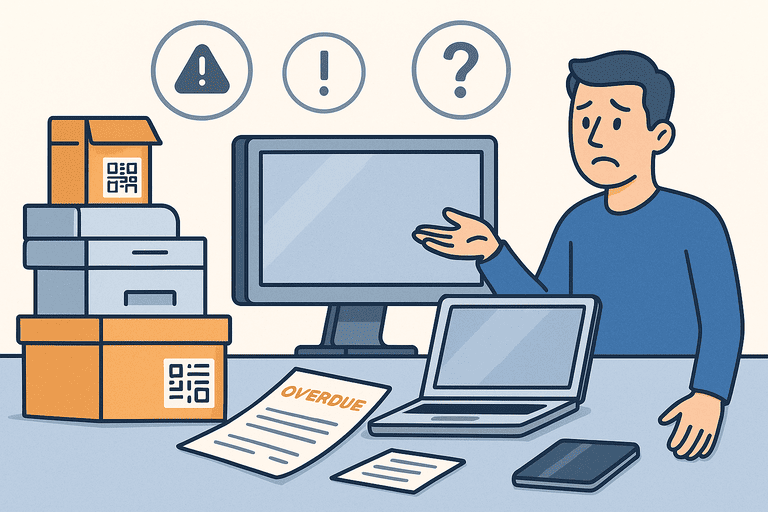
😩 The Chaos of Untracked Gear
You’ve probably heard these before:
- "Who had the tripod last?"
- "I think I saw the charger in the meeting room. Maybe."
- "Didn't we have two mics?"
When there’s no clear record of who took what — and when — things spiral:
- Items go missing with no trace
- Replacements get ordered unnecessarily
- Budgets stretch thin
"We weren’t losing money on big things. We were bleeding from the small stuff — $30 cables, $50 stands, $100 chargers."
If this feels familiar, it helps to quantify the downstream impact (duplicate purchases, wasted time, and audit pain): How Poor Asset Tracking Increases Operating Costs.
🔍 Why Lack of Accountability Breaks Inventory
Shared assets aren’t like personal gear. Without a system for assigning responsibility:
- No one feels ownership
- No one knows who to ask
- Everyone assumes someone else is in charge
This leads to "inventory drift":
- Gradual, undocumented disappearance of items
- Uncertainty about what’s available
- Frustration among team members
✅ How to Introduce Accountability (Without Micromanaging)
1. Assign Items to People, Not Places
Stop leaving gear “in the room” or “by the printer.” Assign it to real people.
- Use a digital tool to log who took what
- Record timestamps and return expectations
2. Log Every Session
Even for temporary use, log the session:
- What the item is
- Who used it
- For which task, project, or event
To avoid “we forgot to log it”, add automated reminders (and escalation rules for overdue returns): Inventory Notifications and Escalation Workflows.
3. Make History Visible
A shared inventory system should show usage logs:
- Who used the speaker last week?
- How often has the monitor been checked out?
- When was the whiteboard last used?
Visibility = accountability. When people know activity is tracked, behavior changes.
4. Use QR Codes for Fast, Accurate Scanning
Don’t rely on memory or spreadsheets. With QR codes:
- Gear can be scanned in seconds
- Assignment is tied directly to an asset’s profile
- Anyone can check availability instantly
To implement QR tagging cleanly (labels, placement, and scan reliability), use: QR Code Inventory Tracking: Setup Guide for Teams.
🚀 InvyMate: Built for Shared Inventory, Backed by Accountability
InvyMate gives you all the tools you need to stop the chaos:
- Assign items by person or project
- Track usage with automatic session logs
- Scan gear with QR codes — mobile or desktop
- Monitor usage across multiple teams or locations
“Since we started using InvyMate, we haven’t had a single cable go missing.”
🎯 Final Thoughts
Shared inventory doesn’t fail because teams are careless — it fails because no one’s clearly responsible.
Assign items by user and keep a clear usage log — automatically.
It’s time to put an end to inventory drift and start building accountability into your team’s workflow.
Related reading
- How Inventory Transparency Improves Cross-Team Collaboration
- Role-Based Permissions in Inventory Systems: What’s Safe
- Reducing Shrinkage and Loss with Smart Inventory Tools
- The Ultimate Guide to Equipment Checkout Systems
- Shared Equipment Policy Template
Methodology
- This page was reviewed against adjacent InvyMate workflow pages and the external references listed below.
- Recommendations are written for practical asset-tracking operations and are intended to stay specific about workflow scope, tradeoffs, and implementation boundaries.
Related Standards and Guidance
- FEMA Property Management Inventory Guidance · U.S. Government Accountability Office
- CIS Critical Security Control 1: Inventory and Control of Enterprise Assets · Center for Internet Security
Try InvyMate
Start tracking assets with QR codes and scheduled audits.